Trading Hub 3.0 (Part 9): Daily Liquidity and Session Liquidity – SMC
Daily liquidity
In this part, we will learn about Daily liquidity and its benefits. First we need to identify the daily timeframe structure; it is not the structure map that includes IDM. I am only talking about the candlestick pattern of the structure that pushes price higher or lower on the chart of daily candles.
Video on how to enter trades using D1 candle liquidity
I will show you, in a bullish or bearish market, how we can identify them and how we can trade.
Turn on the D1 timeframe. The high and low of the previous day's candle are like daily liquidity; most traders buy when there is a trendline breakout.
When the market is bullish and price breaks the low of yesterday's candle, we look for a high-probability Buy trade (HP - High Probability) and set the target at yesterday's high. If price breaks through yesterday's candle high, we look for a short-term Sell trade (LP - Low Probability).
Similarly, when the market is bearish and price breaks the high of the previous day, it is highly likely to be a Sell (HP) and the target is set at yesterday's low. If price breaks yesterday's low, look for a short-term Buy trade (LP). After liquidity is taken, you must switch to CHoCH for confirmation; I will explain in more detail in the Entry part.
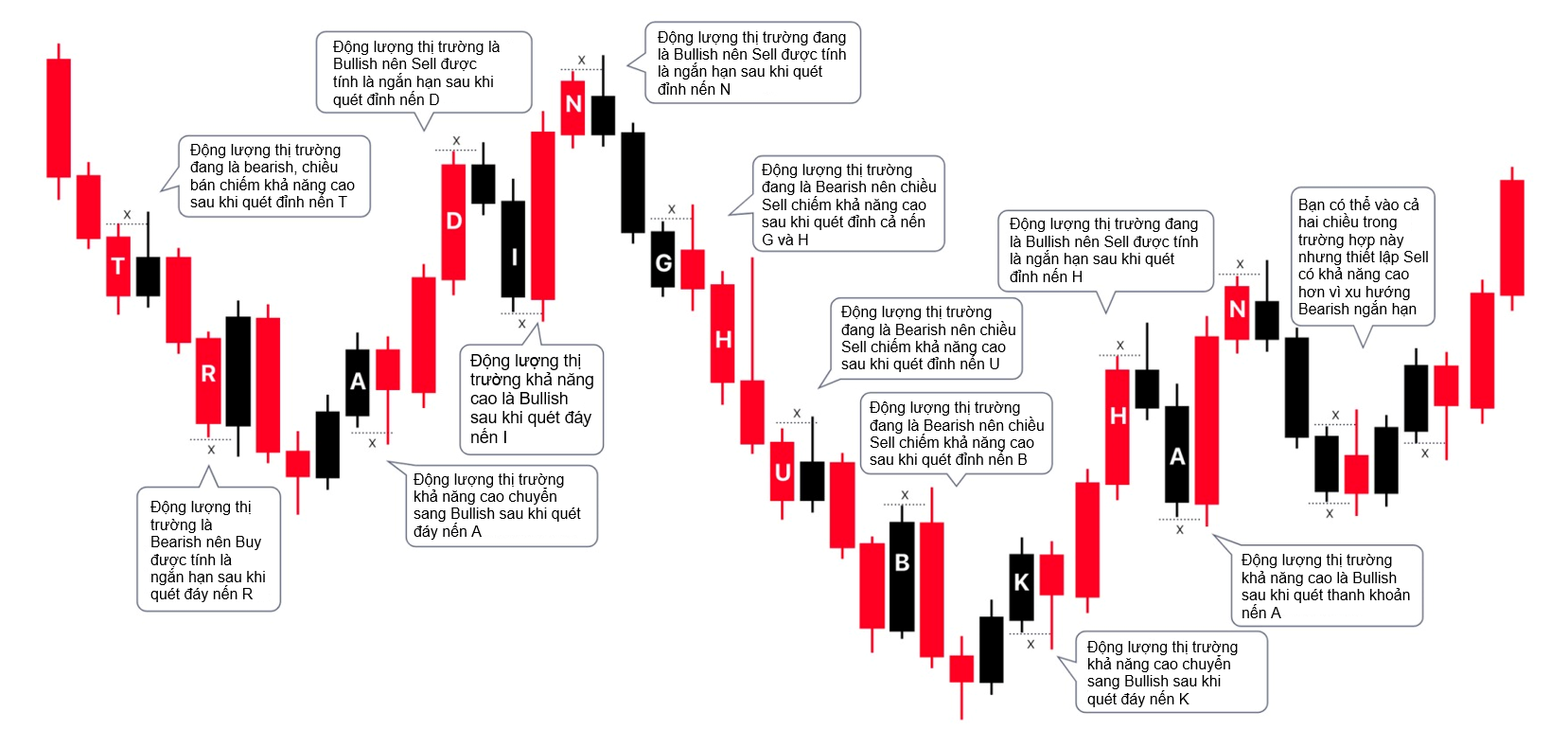 Understanding Daily Liquidity to enter trades on the LTF
This is only an additional confirmation for Buy and Sell. It will tell you what will happen today and you can confidently enter trades on the LTF according to the plan.
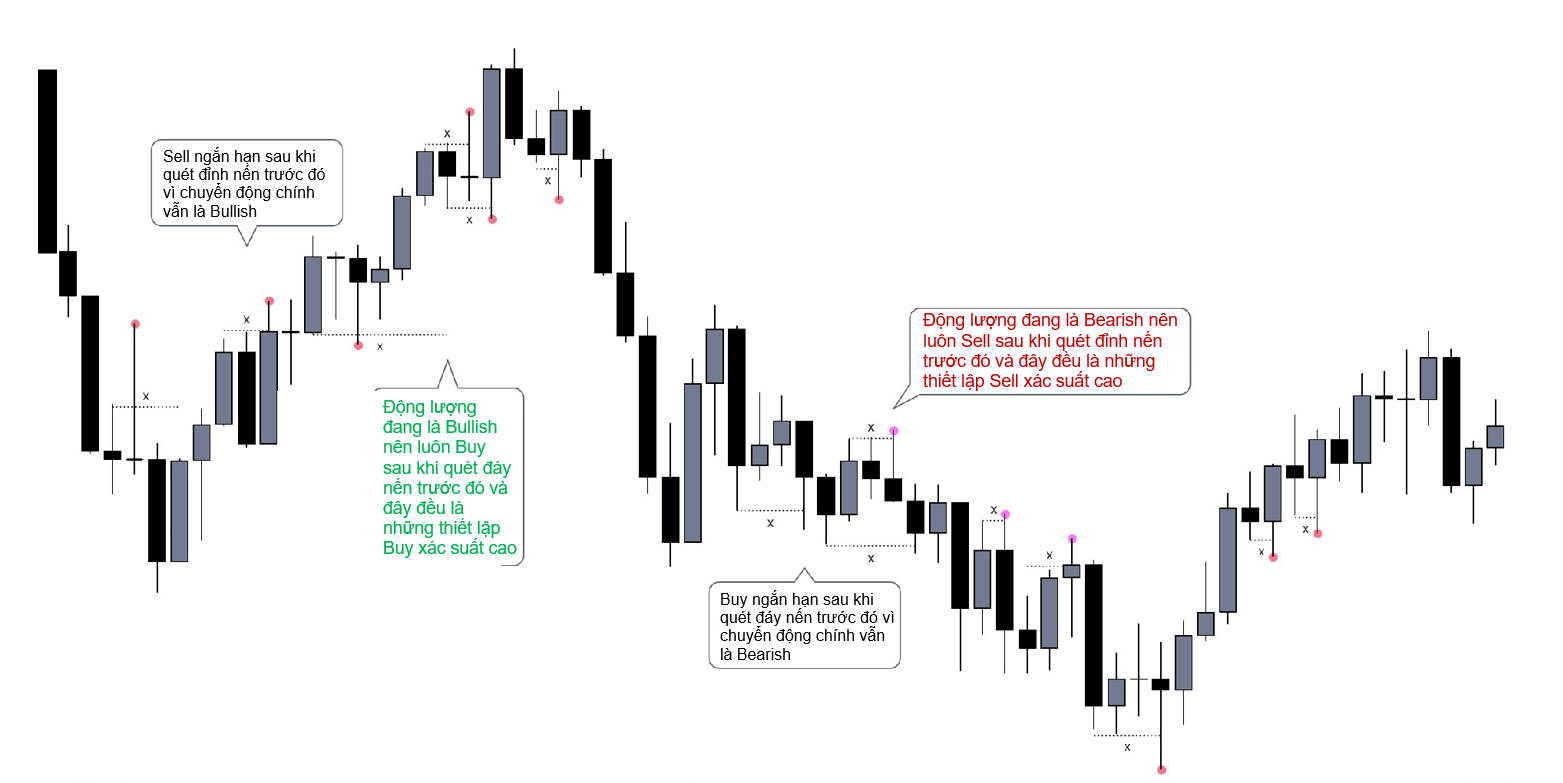 Thinking for entries with Daily liquidity
After determining whether it is a Sell or a Buy (HP or LP), we will switch to the M15 timeframe to identify the POI, then switch to the M1 timeframe to find the entry.
The entry thinking is as follows:
- In an uptrend, when today's D1 candle breaks the high of yesterday's D1 candle, we will switch to M15 to look for a short-term Sell trade, and when it breaks the low, we will switch to M15 to look for a long-term Buy trade.
- In a downtrend, when today's D1 candle breaks the high of yesterday's D1 candle, we will switch to M15 to look for a long-term Sell trade; conversely, if it breaks the low, we will switch to M15 to look for a short-term Buy trade.
Readers can watch the video for more details.
Session Liquidity
Each day has three trading sessions, including the Asian session, the London session and the New York session, with three different timeframes during the day. Sometimes the market breaks the high or low of the previous session (a candle close above or below) and then moves in the opposite direction or continues the previous trend.
The complete guide to session liquidity zones in SMC
Real entries with session liquidity
To set up session liquidity on Trading View, select the Asian Session Range indicator.
What is Session liquidity?
Session liquidity, or Session timing, is session liquidity, according to which the high and low of each session will act like liquidity because there traders will tend to enter Buy or Sell trades. The market needs liquidity to push price up or down, and these types of orders are like fuel for price to run.
Countries' time zones are different and the foreign exchange market is open 24 hours; most traders are active in the London and New York sessions. The previous session is very important for determining the course of the next session.
The Asian session has the lowest volume; very few traders take part in trading in this session.
The London session will provide momentum to push price higher or lower because most traders start trading in this session.
The New York session is the session with the highest volume.
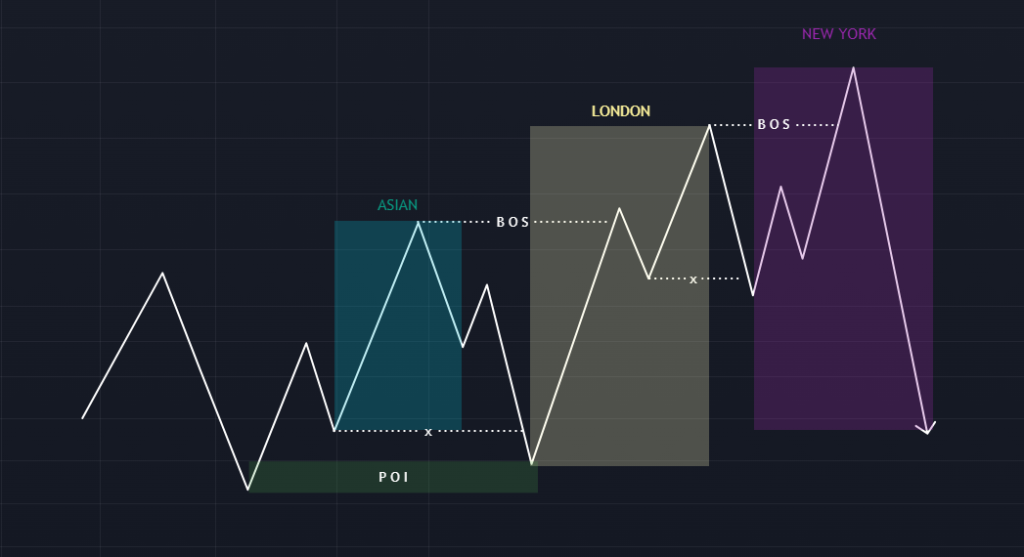 Session timing (figure 1)
The high and low of a session will act like liquidity because once the market breaks the high or low of a session, traders will Buy or Sell based on the breakout.
If price breaks out above a session high, traders tend to Buy, and when price breaks out below a session low, traders tend to Sell. They usually place their stoploss above or below the entry, and when a new session starts, the market will sweep the high and low of the previous session and take all of the retail traders' money, then push price higher or lower.
If you understand how sessions work, applying this to the chart will help you have additional confirmation and more confidence when entering trades.
Trading by session with Session Liquidity
Time and price are very important in SMC. When price breaks through any session high / low, the market will give a reversal move up or down because every session high and low acts as liquidity.
In a day there is at least one session that is manipulated. If the Asian + London session lows continue, the NY session will give a reversal move. Sometimes the Asian session is bullish while the London and New York sessions are bearish. You will very rarely see all three sessions being bullish or bearish.
Based on this, we will have a simple indication: if the Asian and London sessions are a bullish continuation, the NY session will reverse to bearish. The second indication is that if the NY session sweeps through the London session high and closes a candle below it, we can switch to the LTF M1 or M5 to look for a sell entry based on a single candle OB.
In the case where the London session breaks through the Asian session high and closes a candle above it, then price moves up and taps into a POI of the previous M15 timeframe, it is very likely that price will create a CHoCH (see Part 2 CHoCH again) and reverse.
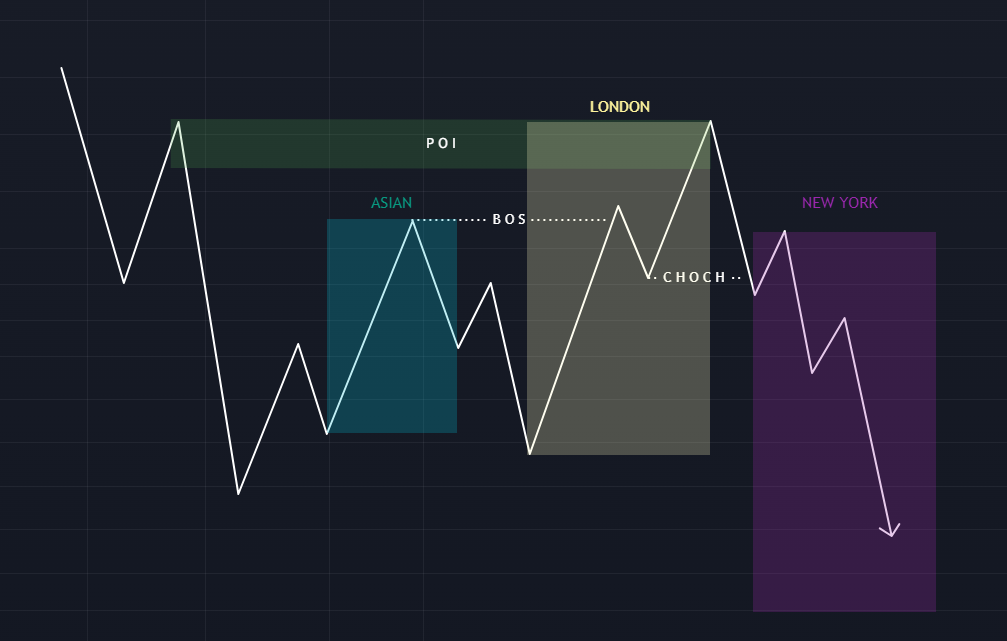 Session timing (figure 2)
So to trade by session, you need to mark the structure of the sessions on the M15 timeframe and draw POIs in the past, if any, to determine a reversal.
Session timing can be used as an additional confirmation before buying or selling without needing to care whether the session is in a bullish or bearish market.
Let us look at the examples below:
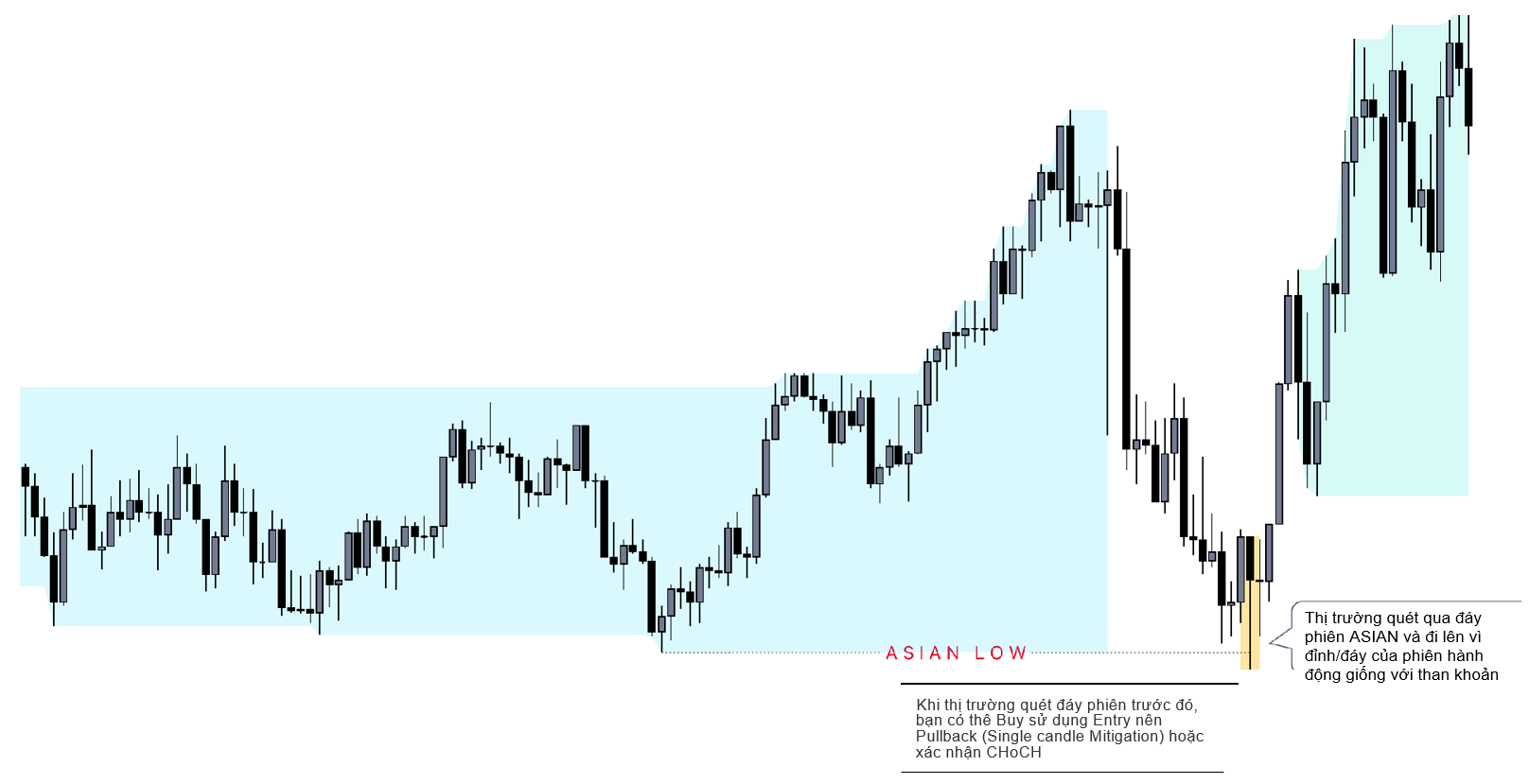 The London session sweeps the Asian session low and then reverses
 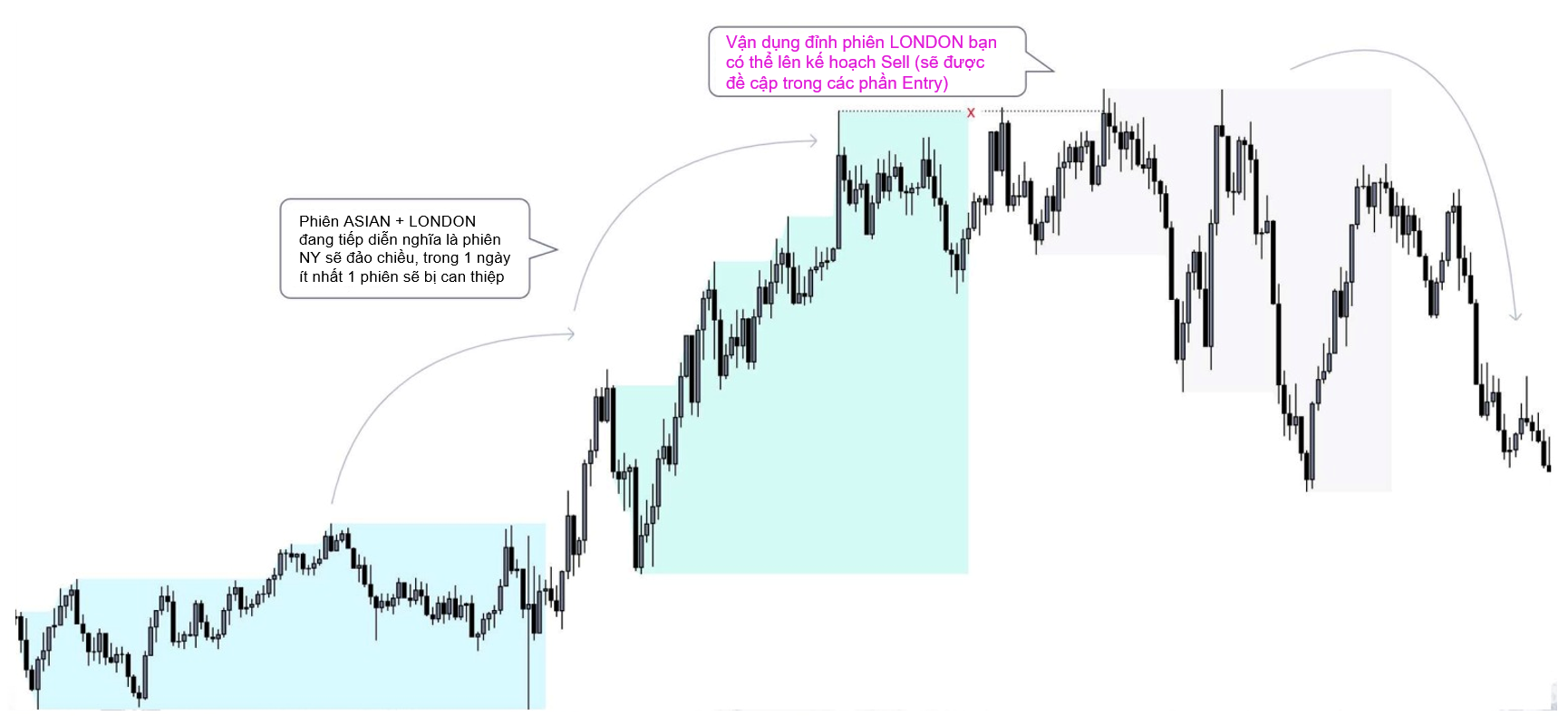 In 1 day there is 1 reversing session if the other 2 sessions continue
 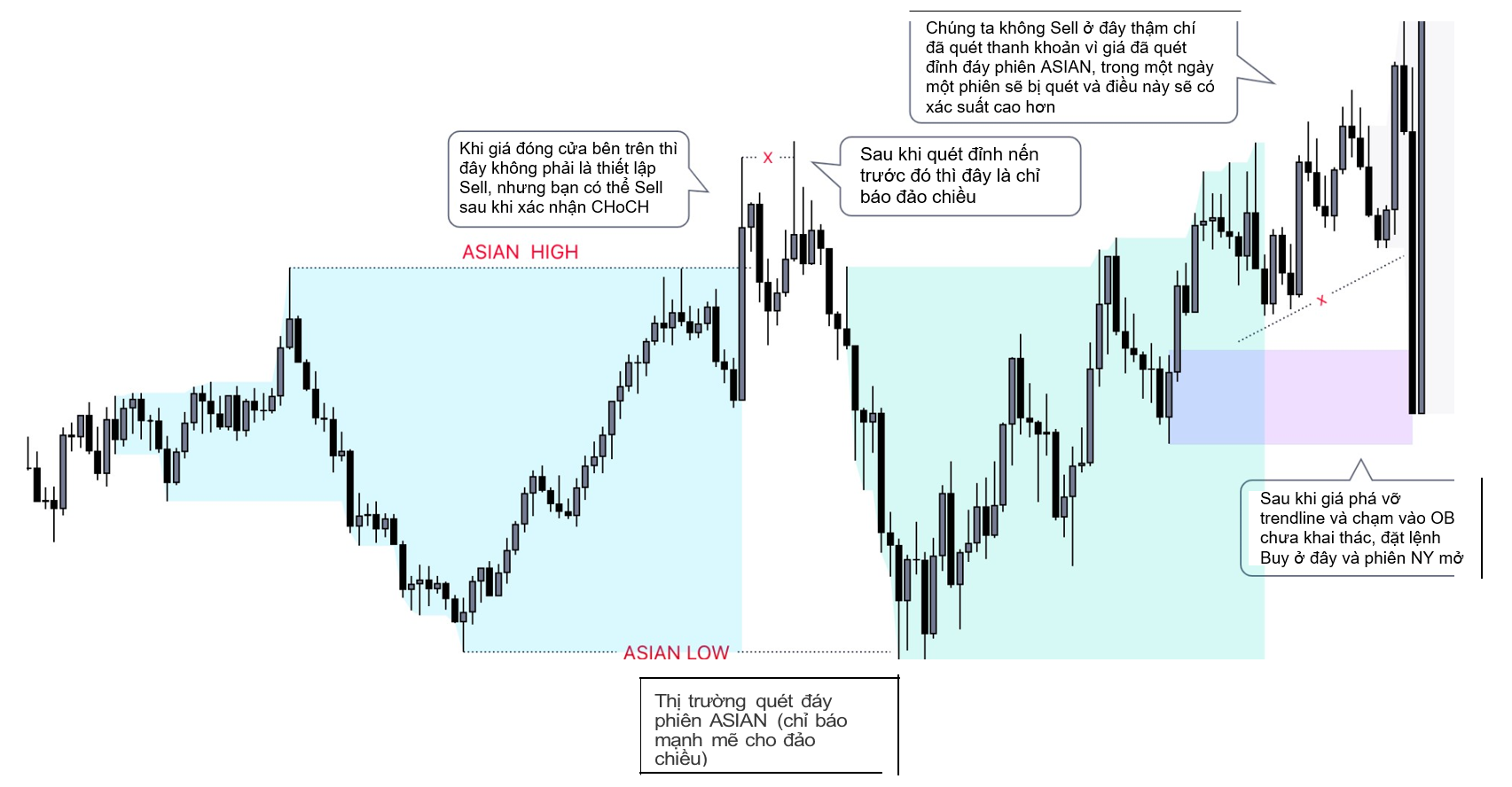 Using Session liquidity as an additional confirmation for entries
 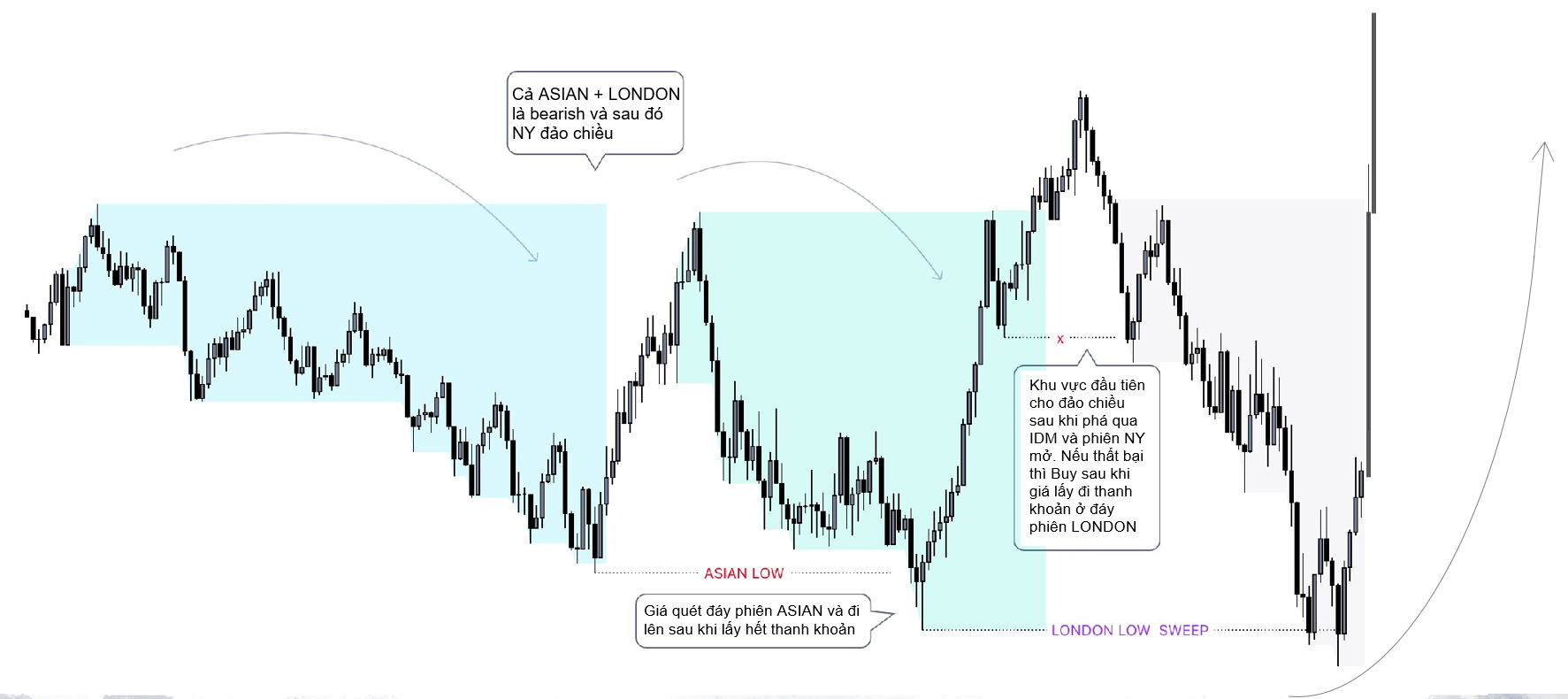 If Asian and London are bearish, NY is bullish
In summary, each session high / low will behave like liquidity, because most traders place Buy or Sell orders below or above the session high / low. Use Session as an additional confirmation to enter trades at the LTF. Trading Hub 3.0 will explain more clearly in the Entry part of this series.
Rate this article
Read structure 10x faster with JUKA
JUKA maps SMC structure — swings, BOS, CHoCH and inducement zones — automatically on any TradingView chart. No more hand-drawing structure for hours.
Get JUKA — $150