Trading Hub 3.0 (Part 6): What Is IFC? – SMC
What is IFC?
According to SMC Trading Hub 3.0, IFC - Institutional Funding Candle is an institutional candle that breaks through any major high or low and takes out all of the liquidity (the candle colour does not matter).
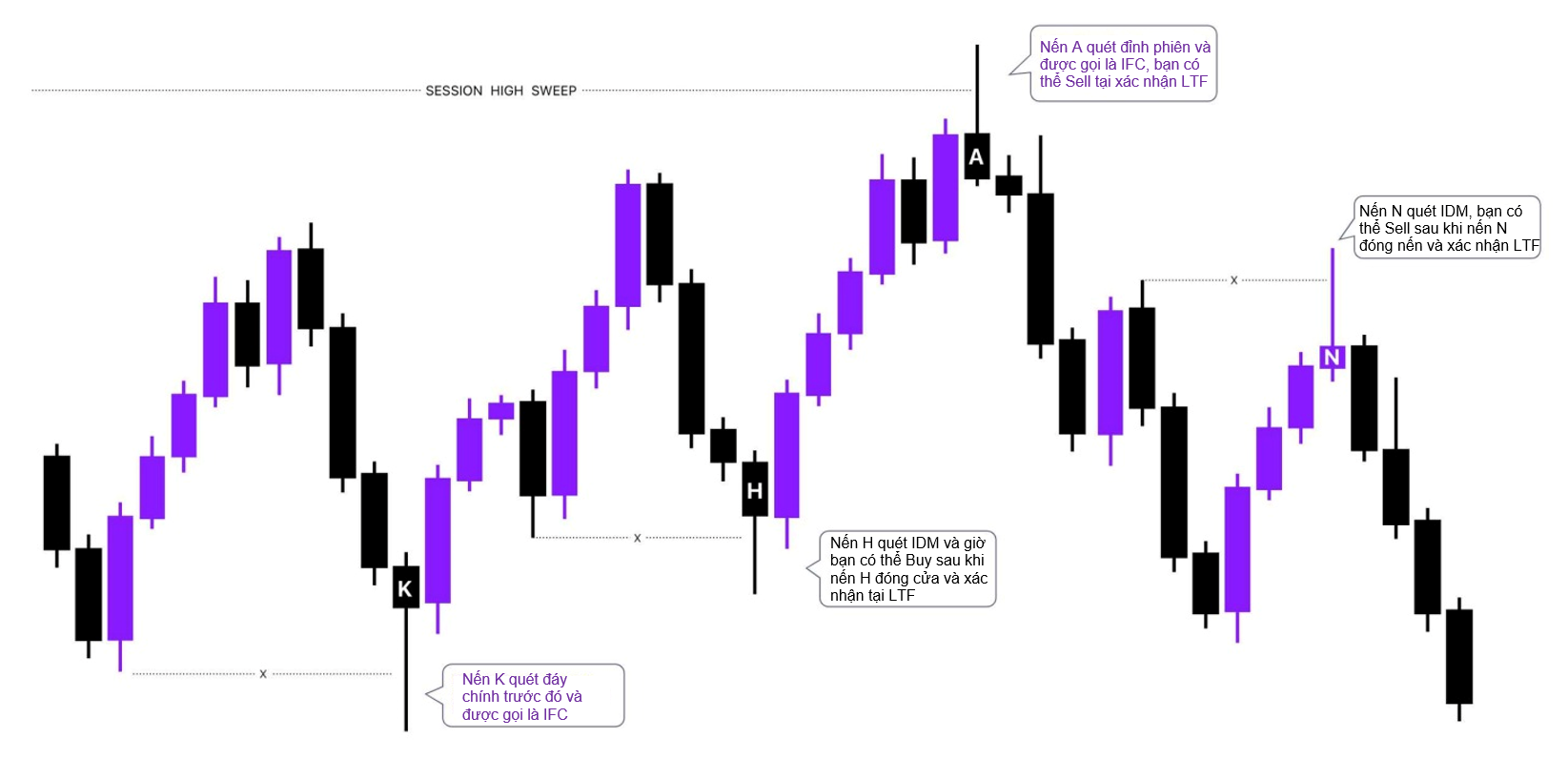 IFC in SMC
Basically, the IFC Candle has passed all of the major stoploss points and then reacted from the high / low to reverse (this can be called a stop hunt or sweep liquidity / entry).
IFC breaks through the previous major low or high and closes above or below it to look for a reversal. We will usually see this type of candle at the top or bottom of the structure.
Full video series on the IFC candle
Entering trades with IFC
When you see IFC sweeping liquidity, you can wait for confirmation at the LTF to Buy or Sell. Readers can study the CHoCH entry, Flip Entry and SCOB, SCM sections to be able to trade on the smaller timeframe.
Or on the larger timeframe HTF, IFC can be considered an OB with a full IMB. When price returns to tap this OB, we can enter a trade without waiting for IDM.
Bullish IFC
Specifically, when the market is in an uptrend and price returns to sweep through the previous major low (or IDM) and creates an IFC, we can Buy at the candle with a long wick rejection, and that movement is called a single leg move - a 1-leg move.
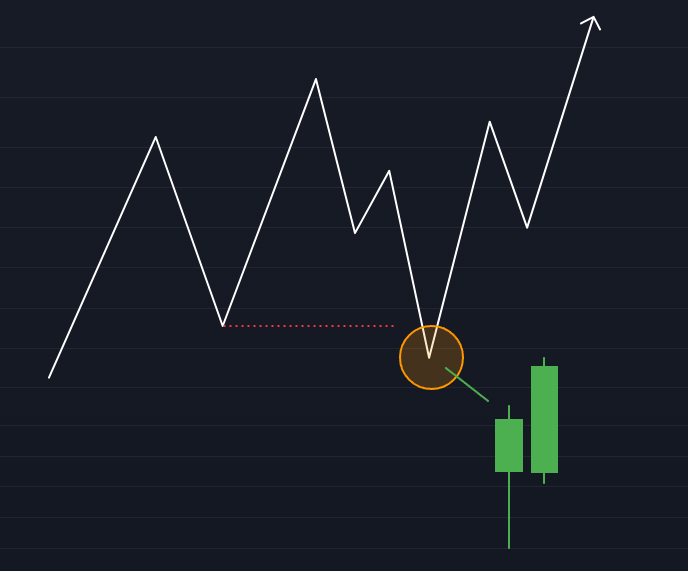 A candle with a long wick rejection is an IFC
Because the candle has a long wick rejection and sweeps liquidity, we can consider IFC to be an Order Block. Therefore we can also look for a Buy trade when price turns back and touches the IFC candle if there is confirmation at the LTF.
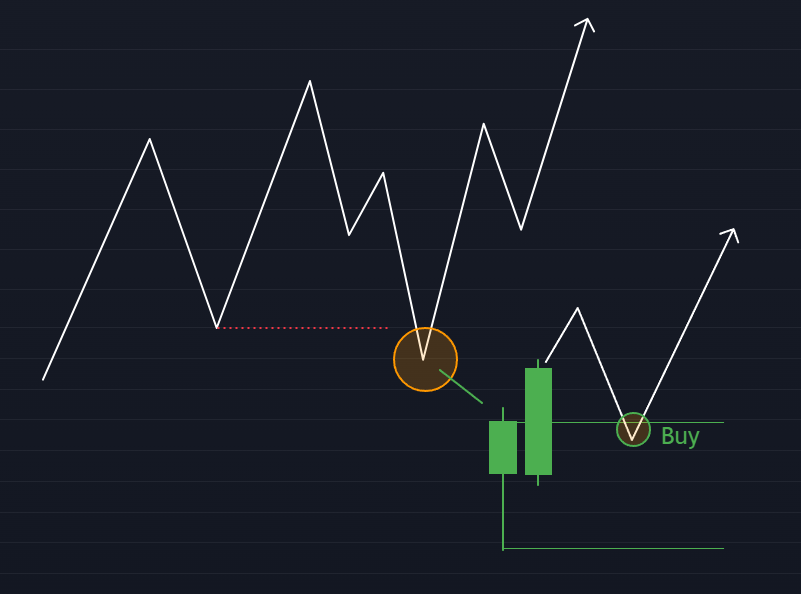 Enter a Buy trade when price turns back and touches IFC
What if price turns back and touches IFC but does not create an IMB? In this case we will use the candle wick as a Demand zone, the candle body above will become the IMB, and when price returns to touch the candle wick we can enter a Buy trade if there is LTF confirmation.
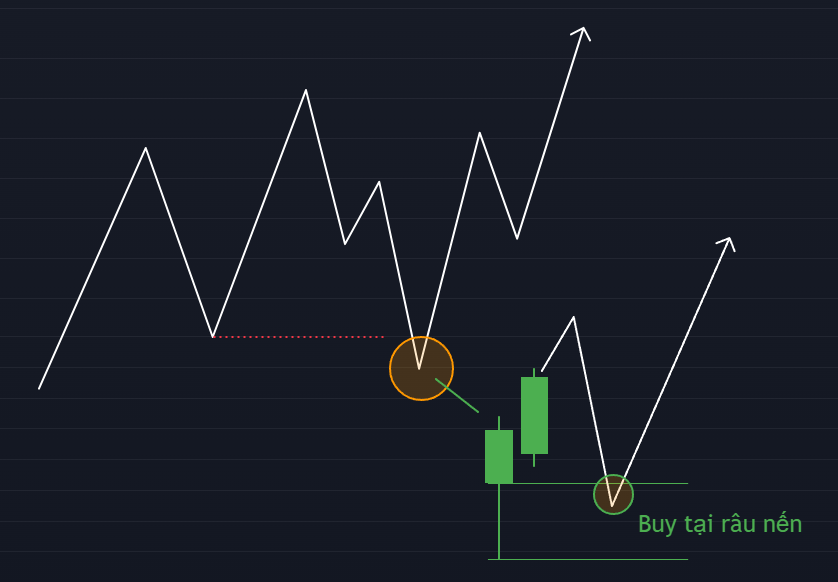 The candle wick becomes a POI
Note: When the market is bullish, we look for Buy trades as above. If IFC forms at the top and suggests a Sell trade, we should only Sell short-term, and should not go against the market trend.
Bearish IFC
Similarly in a downtrend, when price sweeps through the previous major high (or IDM) and creates an IFC, we can Sell at the IFC candle if there is an IMB.
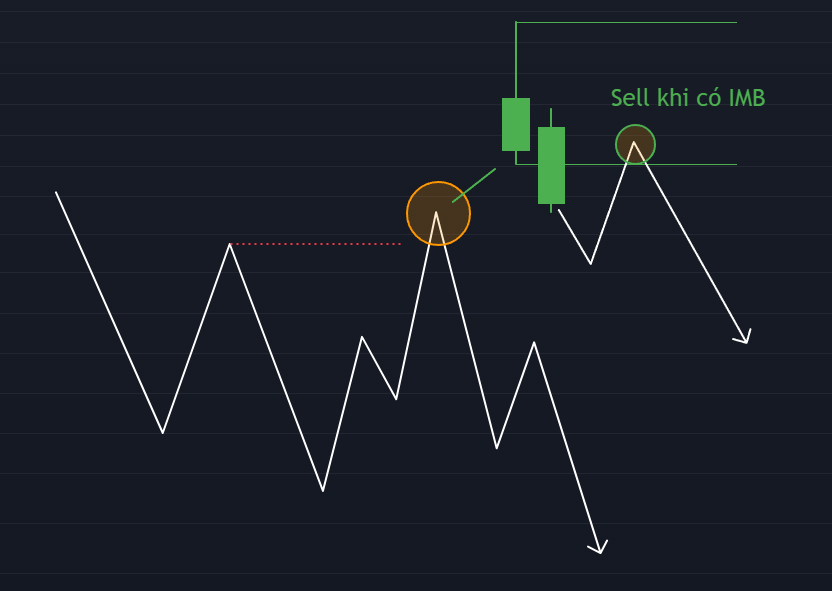 Enter a sell trade at IFC when there is an IMB
When no IMB appears, we use the candle wick as a POI, and the candle body area becomes the IMB. We Sell when price turns back and touches the candle wick if there is confirmation at the LTF.
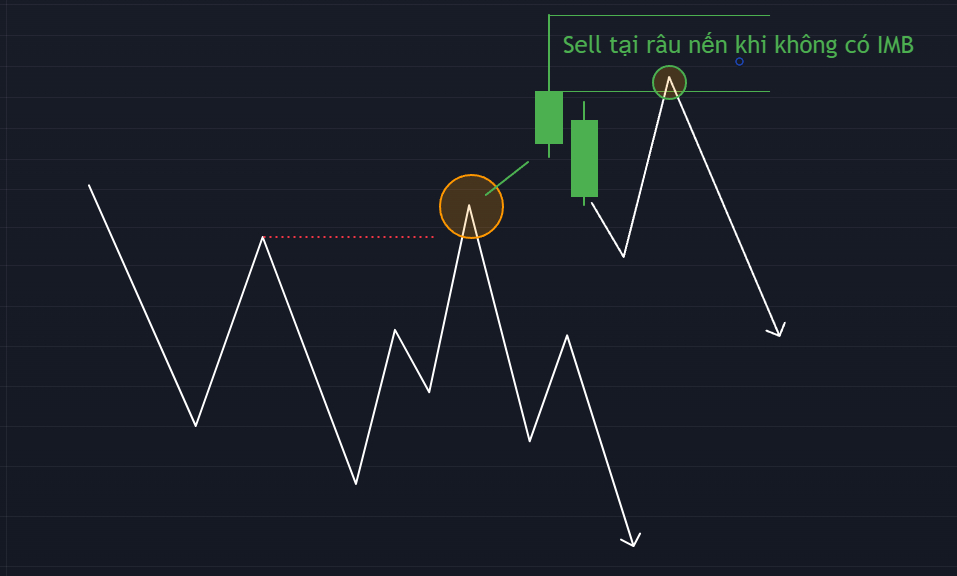 Sell at the candle wick when there is no IMB
If the IFC candle wick is tapped by the next candle, we must move the IFC marking to the following candles until an IMB appears, and the IFC is not tapped by the candle after it.
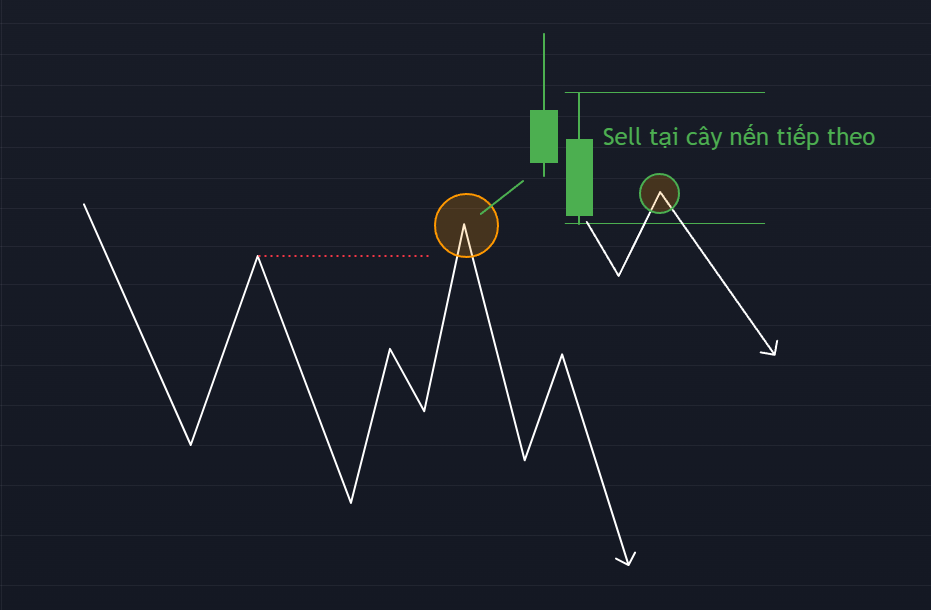 The next candle becomes the IFC
Real example of an Institutional Funding Candle:
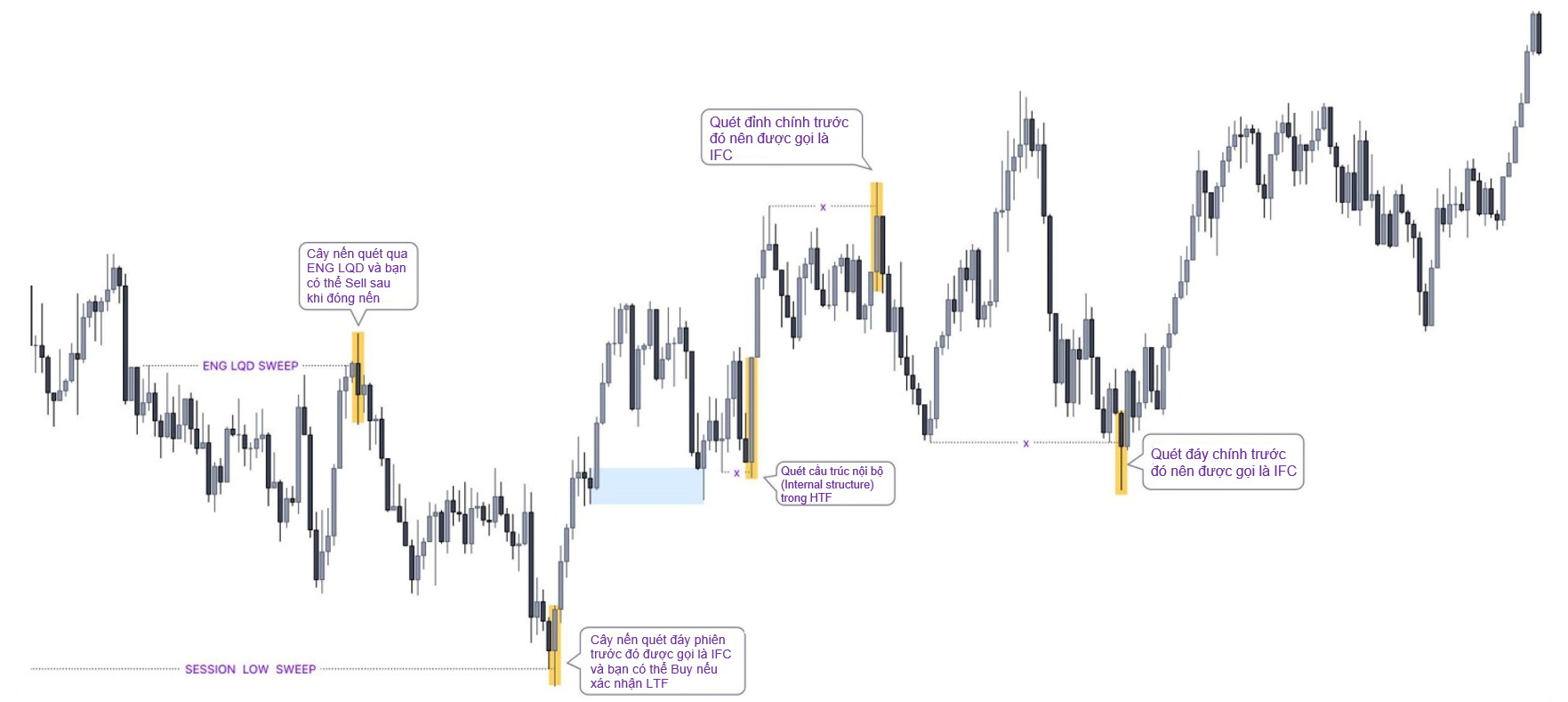 Example of IFC
In an Impulse move, many IFCs can appear. We should prioritise the IFC that appears at a major high or low and limit marking IFCs at internal structure.
5/5 - (2 votes)
Read structure 10x faster with JUKA
JUKA maps SMC structure — swings, BOS, CHoCH and inducement zones — automatically on any TradingView chart. No more hand-drawing structure for hours.
Get JUKA — $150