Trading Hub 3.0 (Part 15): Identifying Types of POI for Trade Entries – SMC
A POI is not an OB; do not confuse these two concepts. Institutions always want to take liquidity by hunting retail stop losses; based on this we can identify high-probability POIs.
What is a POI?
According to Trading Hub 3.0, a POI, or Point of Interest, is a specific area where you can accept risk to enter buy and sell trades after the market has taken liquidity.
There are many different types of POI, but they all operate based on taking liquidity; but how do we identify which type of liquidity we can use as a POI?
Types of POI
POI type 1: liquidity swept beforehand
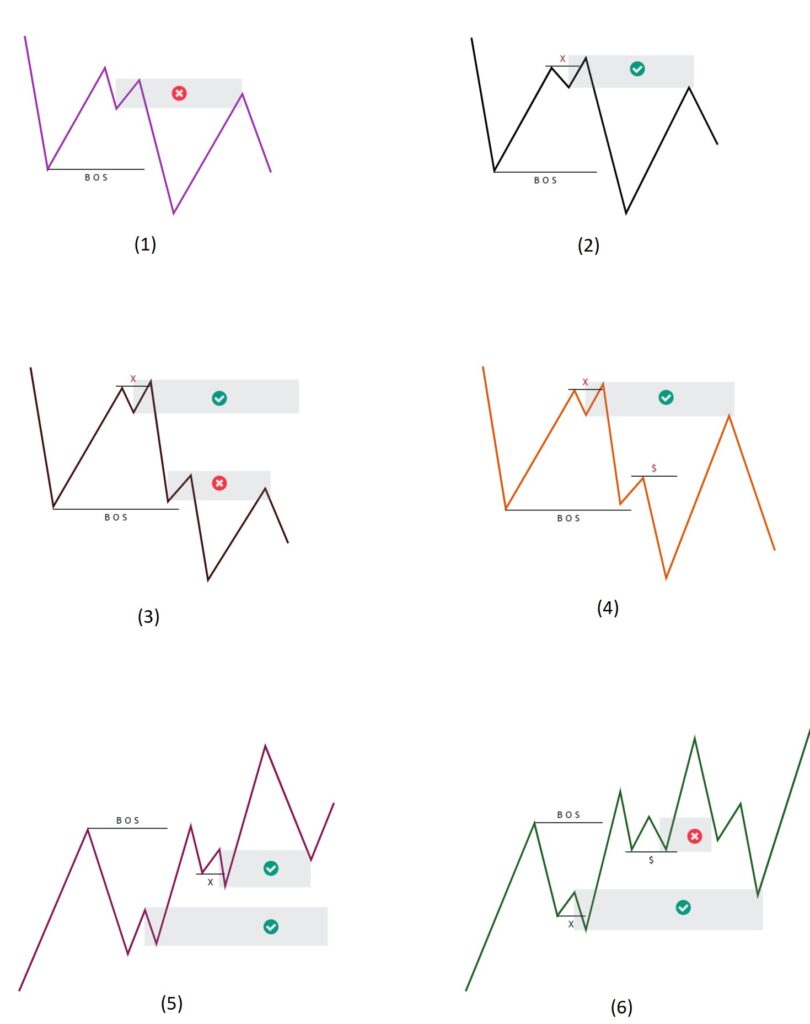 How to identify POI type 1
(1) Because it has not taken any liquidity yet, this is not a POI.
(2) + (4) Because liquidity was swept beforehand, this becomes a valid POI; we can Sell when there is confirmation on the LTF when price touches this POI.
(3) The POI zone above is valid because price swept liquidity beforehand; the zone below did not sweep liquidity, so price will tend to go up to touch the POI above and we Sell when there is confirmation on the LTF.
(5) The POI zone above has taken liquidity so it becomes valid; the POI zone below is also valid because price has taken liquidity in the zone above. Whichever POI price touches, we can enter a Buy trade when there is confirmation on the LTF.
(6) The POI zone above has not taken liquidity yet so it is not valid; price tends to go down to the POI zone below because liquidity was taken there beforehand.
POI type 2: liquidity swept afterwards
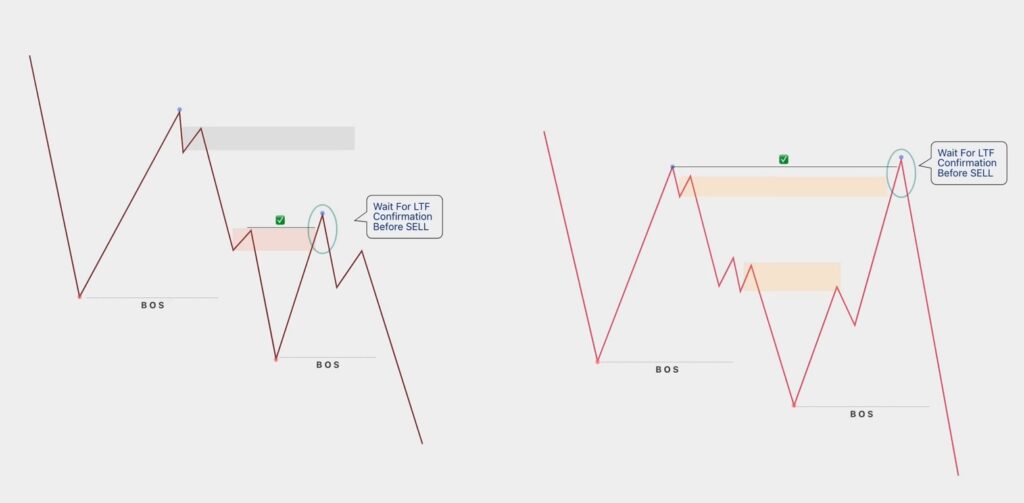 Identifying POI type 2
When the market sweeps LQD and wicks back, that wick candle itself is the POI and we can switch to the LTF to look for an entry point.
The candle wick event is exactly institutions hunting retail SL (taking liquidity). Readers should review Part 6 - IFC (institutional candle).
IFC, or a sweep entry, both take liquidity just like Single Candle Mitigation; review Part 13 - Entering trades with SCM. We also set up entries in a similar way.
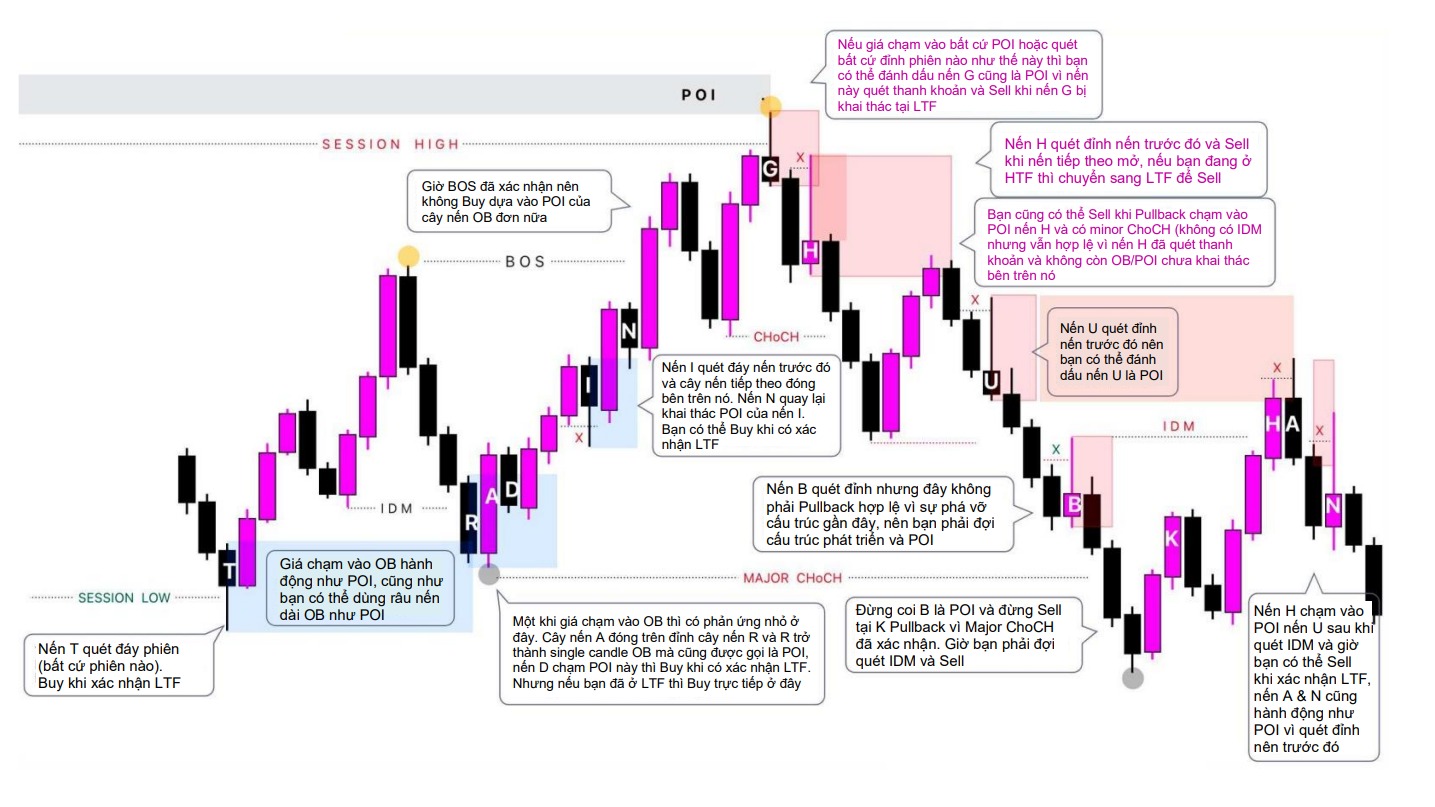 Different types of POI
Specific example:
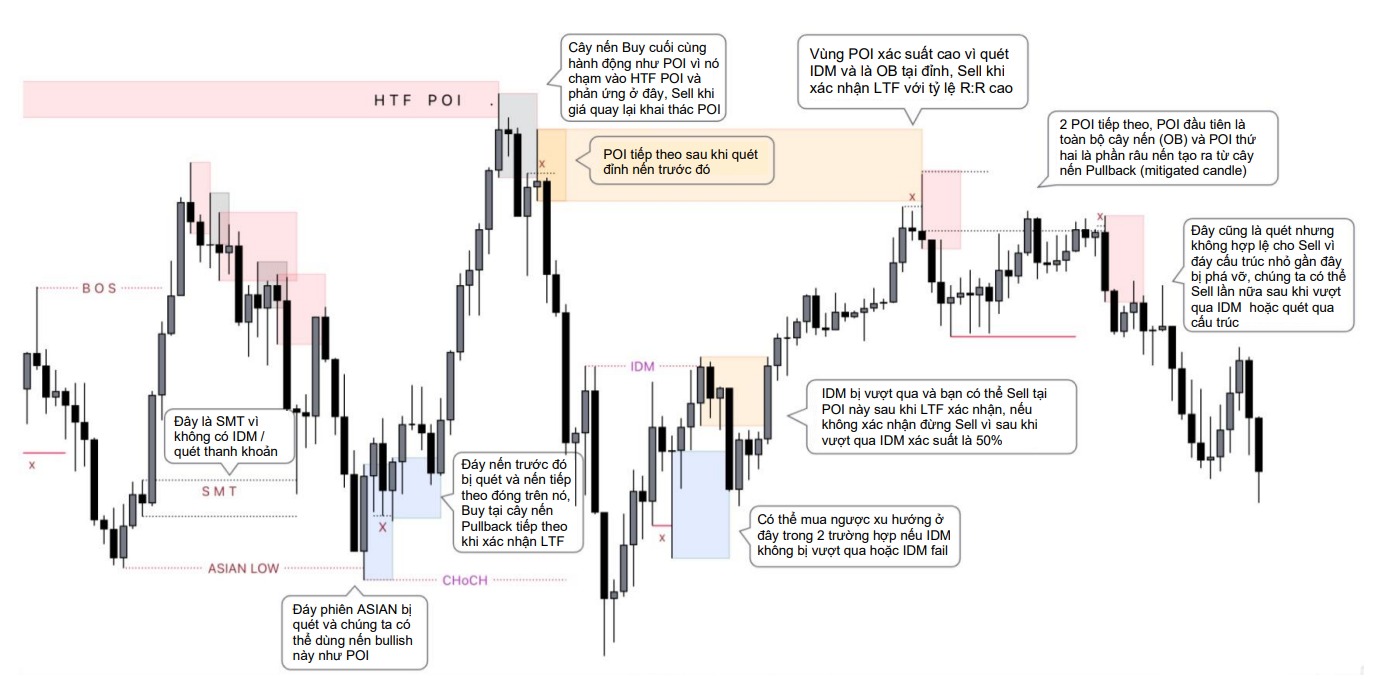 Example of identifying types of POI
Hidden POI in SMC
A Hidden POI appears when there is a wick candle that sweeps the previous liquidity; the distance between the two candle highs / lows is called a Hidden POI. After creating a hidden POI, price reverses and closes outside the POI and then tends to return to tap this POI.
If you pay attention, the situation where a Hidden POI occurs is similar to POI type 2: liquidity swept afterwards, and quite similar to IFC; however, instead of using the whole candle as a POI, we consider the difference between the two candle highs / lows at the extreme as the POI.
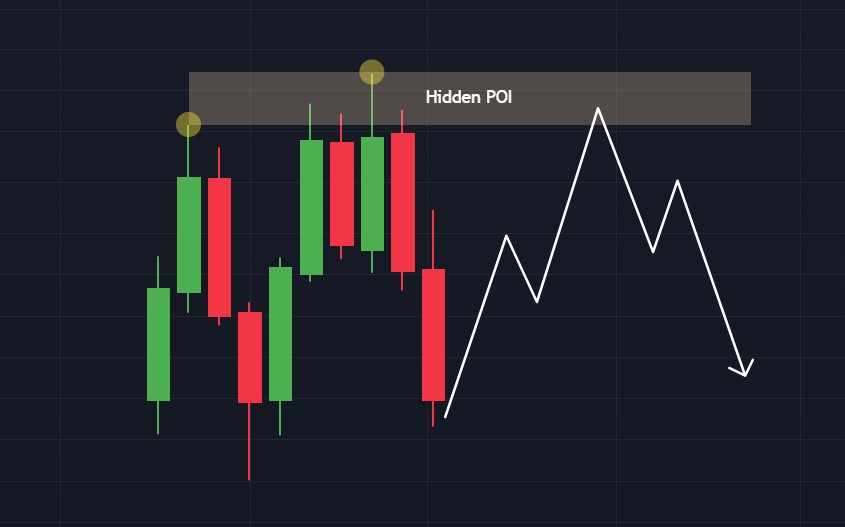 How to identify a hidden POI
We can enter a trade when price leaves the hidden POI and then returns to touch it; to increase the win probability and scale into trades we can drop to the LTF and wait for SCOB/CHoCH/Flip confirmation.
Note when placing a stop loss with a hidden POI: we should place the SL a bit further away; if there is another POI we should place the SL above / below that POI, because price can wick again and create another hidden POI. As in the image above, we see price wicked like that twice.
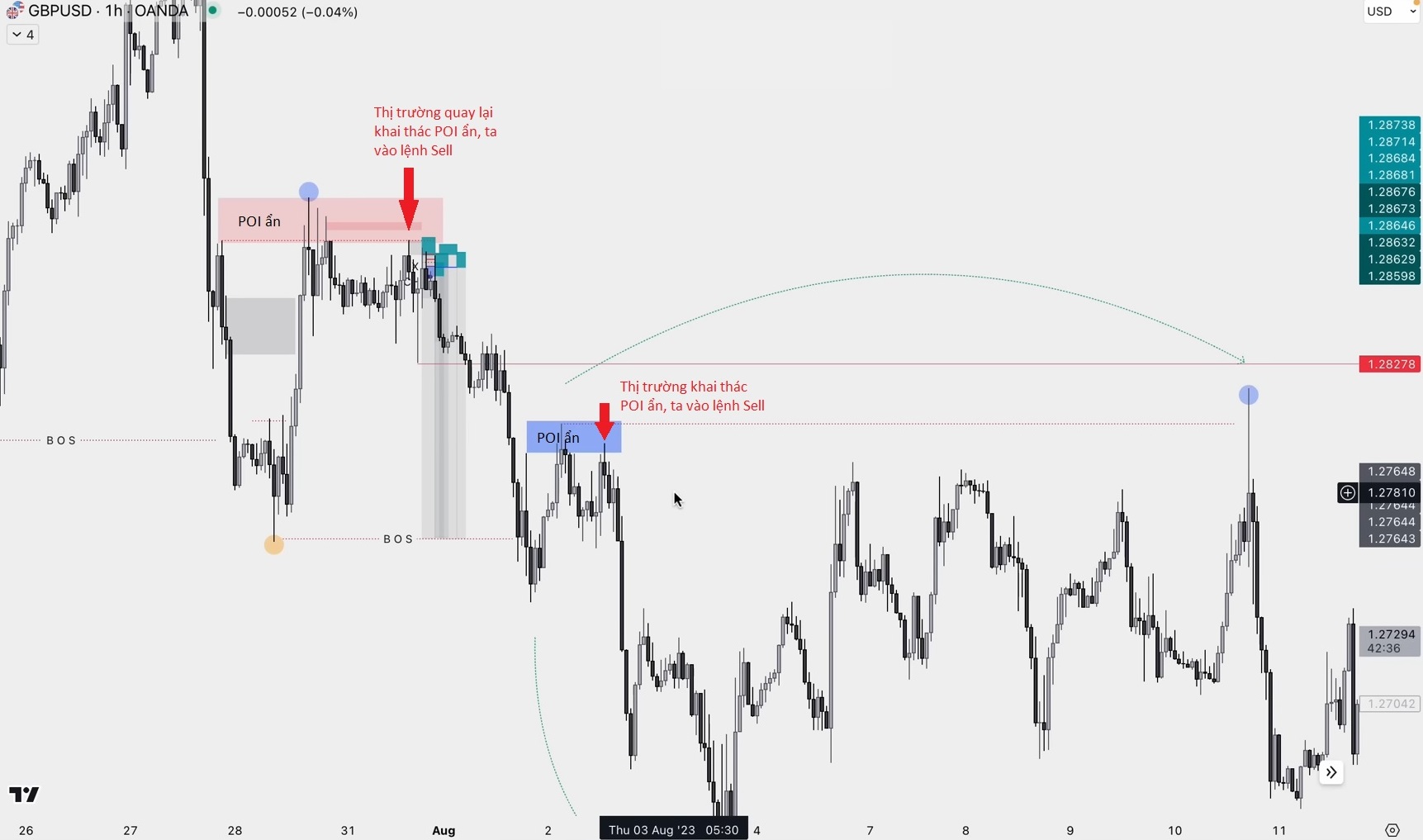 Example of a hidden POI
Hidden POIs appear everywhere on the structure map; however, we should look for them in areas where an entry is likely, such as pullback areas, IDM, or HTF POI areas.
5/5 - (4 votes)
Read structure 10x faster with JUKA
JUKA maps SMC structure — swings, BOS, CHoCH and inducement zones — automatically on any TradingView chart. No more hand-drawing structure for hours.
Get JUKA — $150