Trading Hub 3.0 (Part 7): Types of Liquidity – SMC
Liquidity is basically the main part of Smart Money Concepts. If you do not understand exactly what liquidity is, there is a good chance you yourself are part of the liquidity.
Liquidity acts like fuel for the market to push price higher or lower.
What is Liquidity in SMC?
Liquidity is the amount of orders that most traders are looking for for a Buy or Sell trade at a specific point.
Liquidity is not only stop losses, it is also the amount of Buys or Sells from traders. This is a very important factor in SMC, so readers need to read and watch the video carefully.
Institutions and banks often tend to sweep liquidity so they can easily push price higher or lower.
If you understand liquidity clearly, you can "crack" Smart Money Concepts easily.
Video lesson on Liquidity
What is retailer liquidity?
Most Retail (retail traders) trade based on Trendlines, patterns and indicators such as Bollinger Bands, MA 89, Head and Shoulders, Resistance & Support lines… This is the main reason why Smart Money (Banks and Institutions) manipulate Retail.
To trade smartly like Smart Money, you need to understand what retail traders are thinking, meaning you also need to become a good retail trader.
According to SMC, if someone Buys at a demand zone, you must wait for the stop loss sweep and only then look for a Buy trade. Similarly, if someone Sells at a supply zone, you must wait for the stop loss sweep and only then look for a Sell trade.
The stop hunt action is exactly Smart Money sweeping liquidity; when Smart Money has taken all of retail's money, that is when we enter a trade.
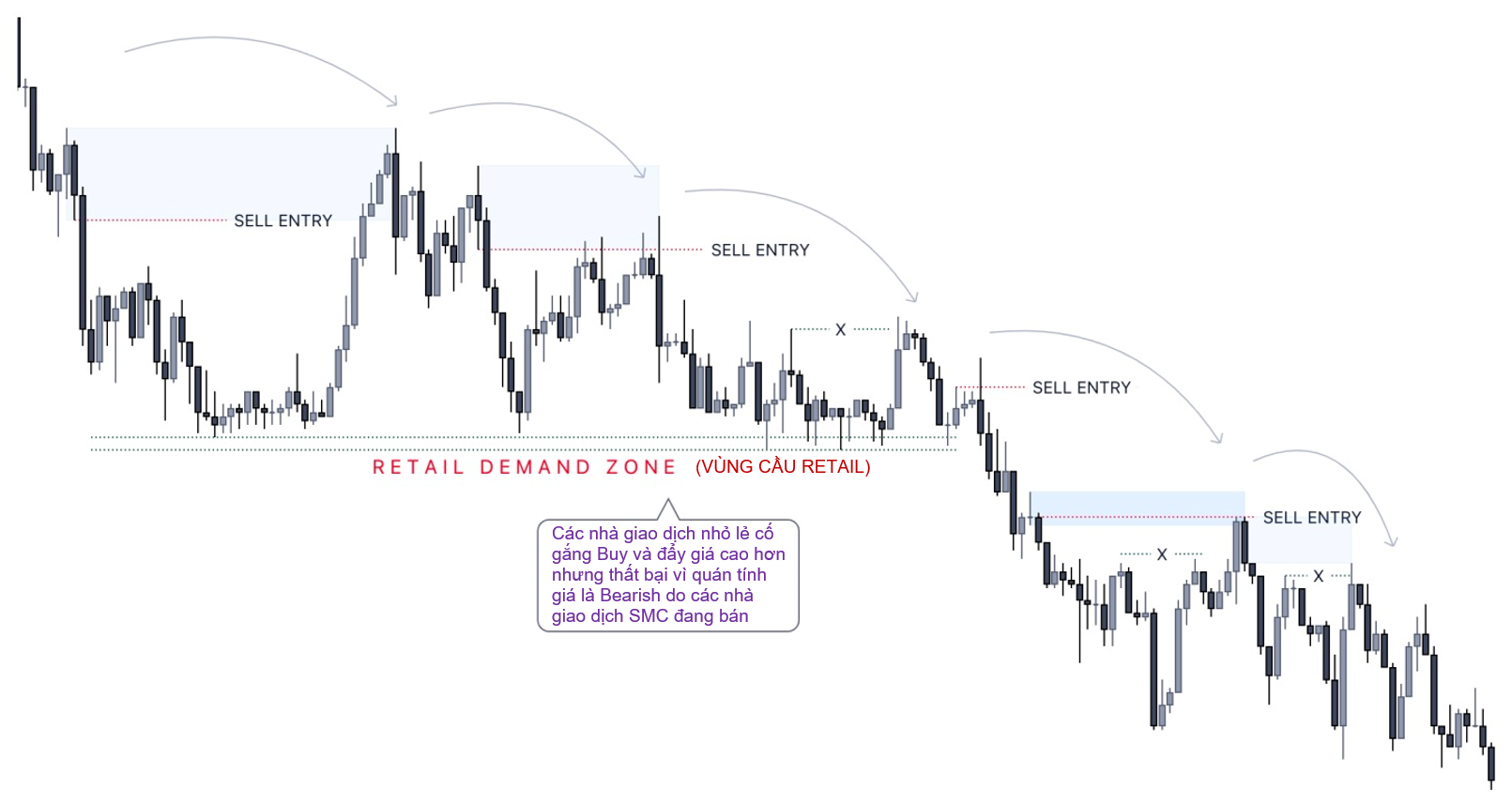 Retail vs Smart Money
Entering trades with Liquidity
Note: Liquidity is only an additional confirmation for entering a trade; for entry details we will discuss in the following parts of the Trading Hub 3.0 material.
Now we will look at cases of entering trades with Liquidity through specific examples.
Entering trades with Support & Resistance / EOH / EOL
At a strong resistance line or Equal High, retail will place Sell orders and stop losses above the resistance. However, Smart Money will hunt these SLs, so we need to wait for Smart Money to sweep all the liquidity before entering a trade on the LTF.
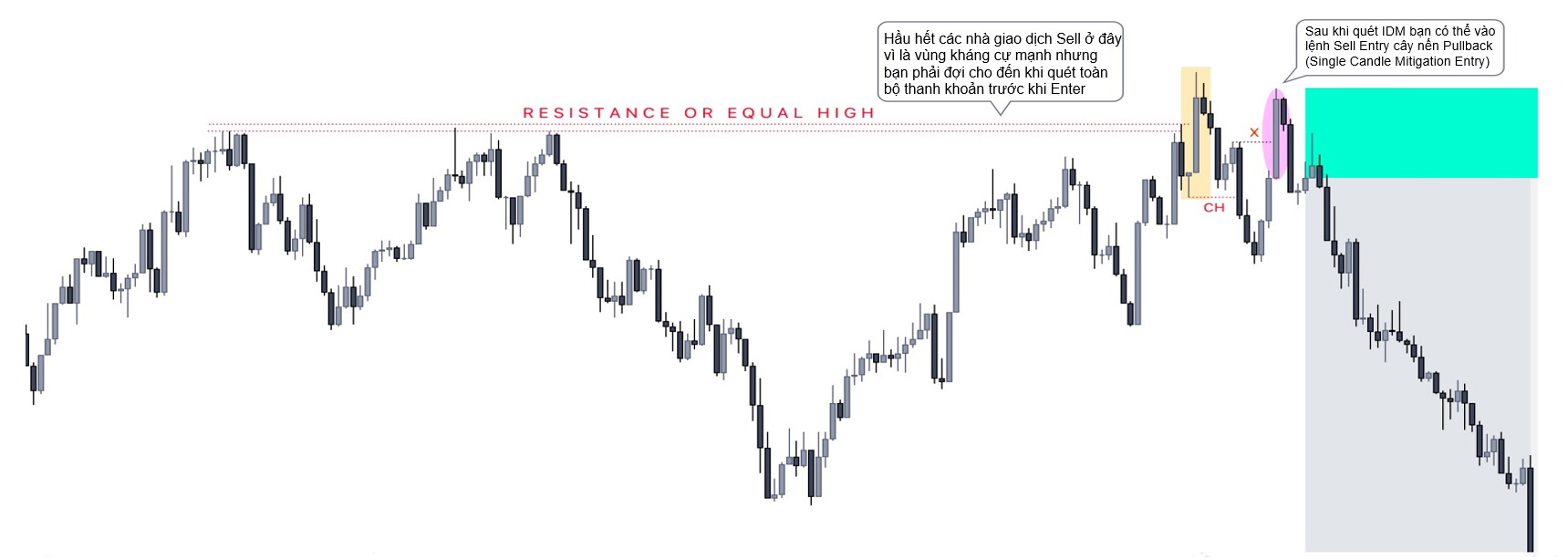 Resistance or equal high
Similarly with a strong support line, retail will place Buy orders when price touches the support line and place stop losses below it. Smart Money will sweep all the stop losses and we will switch to a smaller time frame to enter a trade.
Entering trades with a Trendline
A Trendline is an important part of Retail traders' trading method; when you are looking for a Buy or Sell trade after the trendline is broken you need to wait for an appropriate setup according to SMC.
When price breaks up, think about a sell setup, and if price breaks down, think about a buy setup. If the market trend is up, prioritise buy setups, and conversely, if the trend is down, prioritise sell setups.
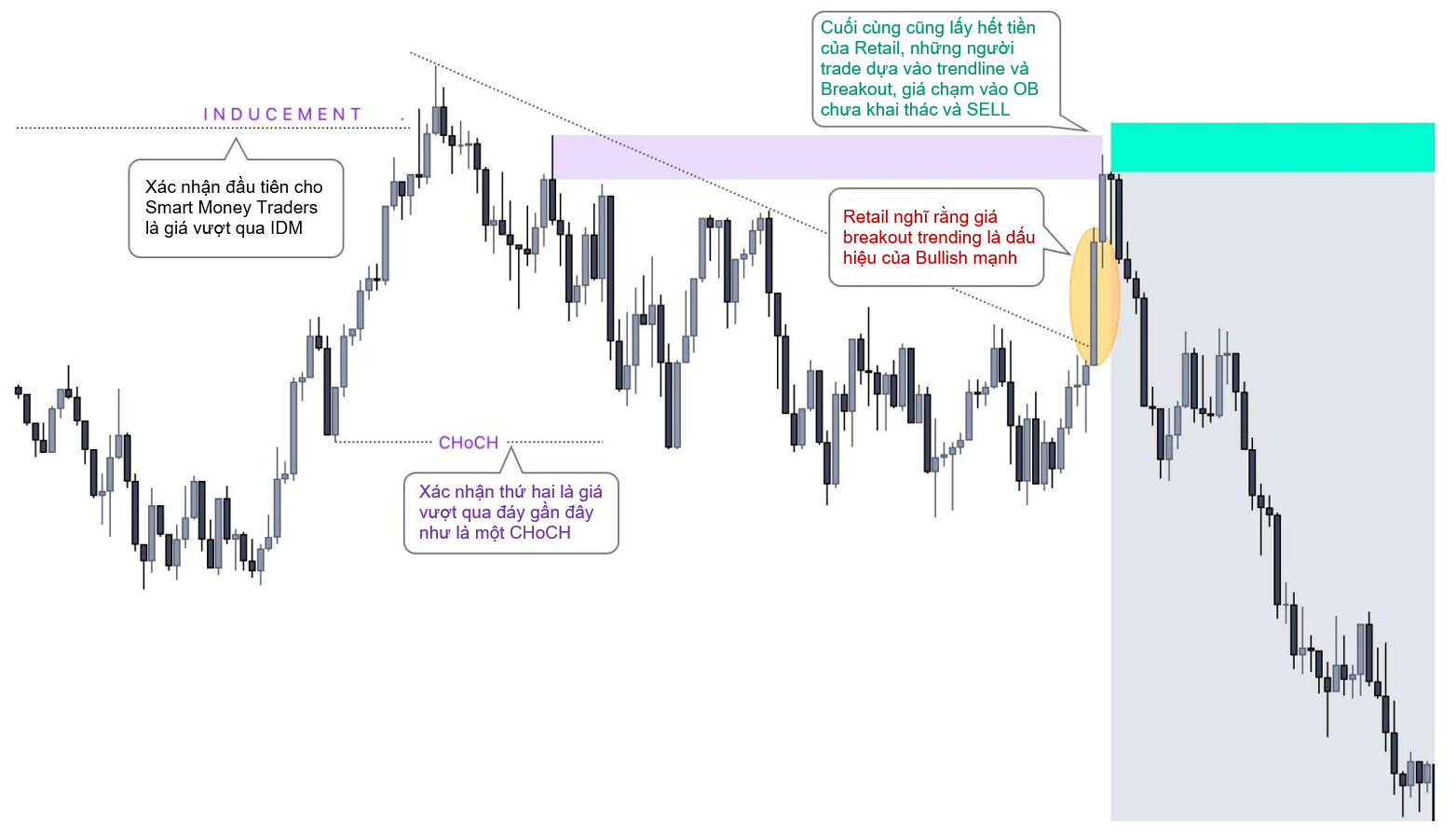 Enter a Sell trade when price breaks up through a trendline
 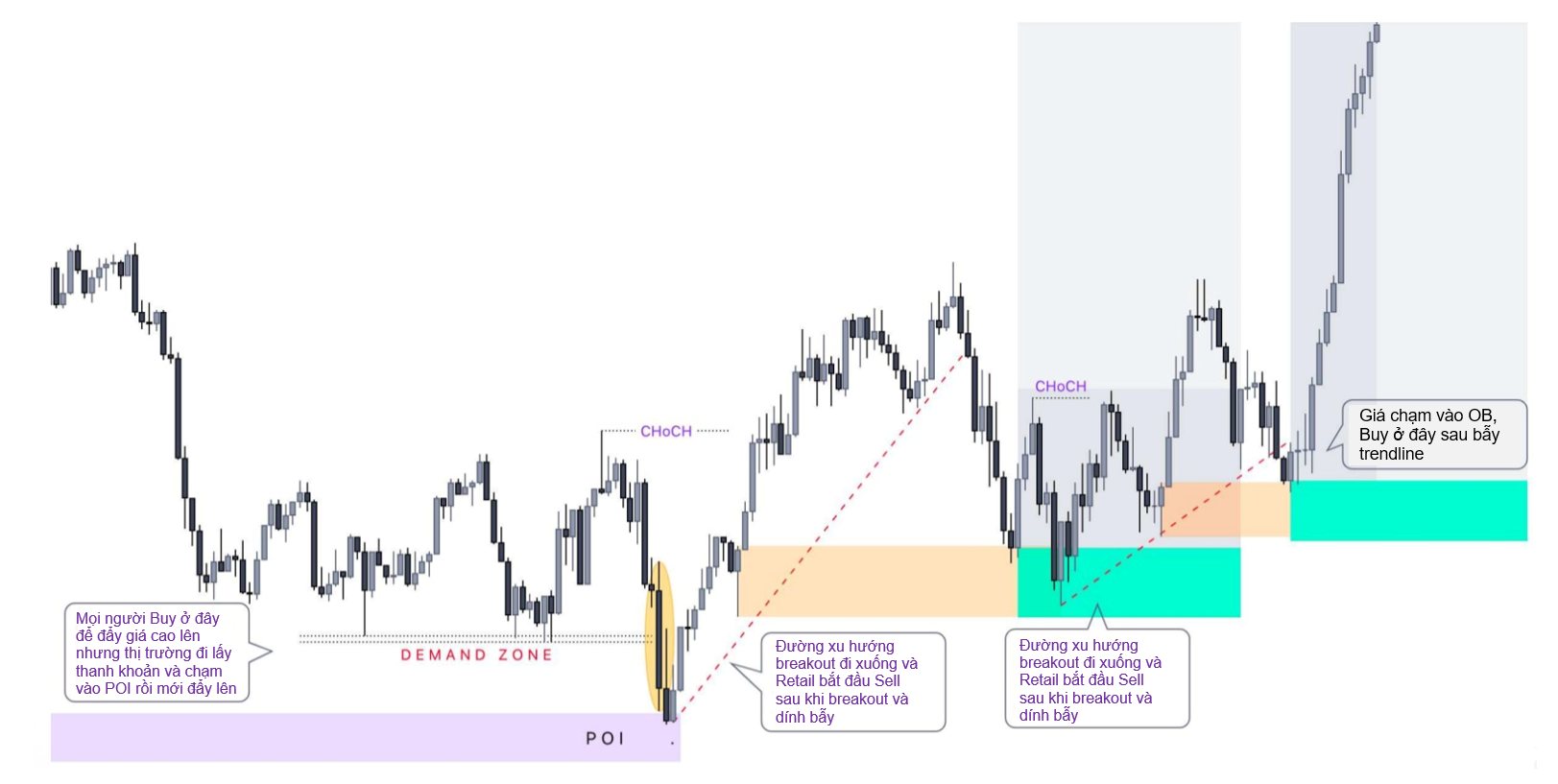 Enter a Buy trade when price breaks down through a trendline
We will encounter price breaking through a trendline many times on forex, crypto, stock and commodity charts.
For ordinary retail traders, breaking through a trendline looks like price reversing, but for Smart Money it only looks like taking liquidity to use as fuel for the trend to continue.
5/5 - (3 votes)
Read structure 10x faster with JUKA
JUKA maps SMC structure — swings, BOS, CHoCH and inducement zones — automatically on any TradingView chart. No more hand-drawing structure for hours.
Get JUKA — $150