Lesson 2: What Is Wave Degree? Why Wave Degree Determines the Entire Elliott Analysis
Elliott wave degree is the hierarchical system of wave scale, determining which wave is larger and which wave is a component inside which other wave. This is the mandatory foundation you must grasp before counting any wave on a chart. If you cannot identify the wave degree, you can miscount waves right from the start.
Two traders look at the same chart, both recognize a 5-wave structure, but arrive at completely opposite counts. One person sees this as wave 3 of a Primary wave developing strongly, while the other insists this is wave C of an Intermediate correction about to end. Both could be right about the structure they see, or both could be wrong. The most common cause of this kind of contradiction: confusing Elliott wave degree.
The 9 Elliott Wave Degrees: From Grand Supercycle to Subminuette
Elliott identified 9 wave degrees, from the largest to the smallest. Frost and Prechter, who inherited Elliott Wave Theory and authored Elliott Wave Principle, preserved this system in Elliott Wave Principle and named each degree according to their own convention, without using common technical terminology.
A complete summary table of the wave degrees:
| Degree | Reference name | Suggested timeframe | Motive wave notation | Corrective wave notation |
|---|---|---|---|---|
| Grand Supercycle | Grand Supercycle | Centuries | [I] [II] [III] [IV] [V] | [A] [B] [C] |
| Supercycle | Supercycle | Many decades (40–70 years) | (I) (II) (III) (IV) (V) | (A) (B) (C) |
| Cycle | Cycle | 10–30 years | I II III IV V | A B C |
| Primary | Primary | 1–4 years | [1] [2] [3] [4] [5] | [A] [B] [C] |
| Intermediate | Intermediate | Several months to 1 year | (1) (2) (3) (4) (5) | (A) (B) (C) |
| Minor | Minor | Several weeks to several months | 1 2 3 4 5 | A B C |
| Minute | Minute | Several days to several weeks | [i] [ii] [iii] [iv] [v] | [a] [b] [c] |
| Minuette | Minuette | Several hours to several days | (i) (ii) (iii) (iv) (v) | (a) (b) (c) |
| Subminuette | Subminuette | Several minutes to several hours | i ii iii iv v | a b c |
Beyond the 9 wave degrees, Glenn Neely added 2 more degrees, Micro and Sub-Micro, in his NeoWave material (an advanced version of Elliott). In practice, when researching Elliott literature, you will usually only see the 9 Elliott wave degrees mentioned.
In the table, you will see that (I), [1], 1, and (i) are all "Wave 1" but written differently. This is the point that causes the most confusion when first approaching Elliott Wave.
In reality, that is the notation system for distinguishing degrees. It is the same "wave 1," but at the Primary degree it is written [1], at the Intermediate degree it is written (1), at the Minor degree it is written 1, and at the Minute degree it is written [i]. Just by looking at the notation, you immediately know which degree that wave belongs to.
Modern software such as TradingView does not use Roman numerals but represents everything with numbers and brackets. Each additional layer of brackets corresponds to one higher degree.
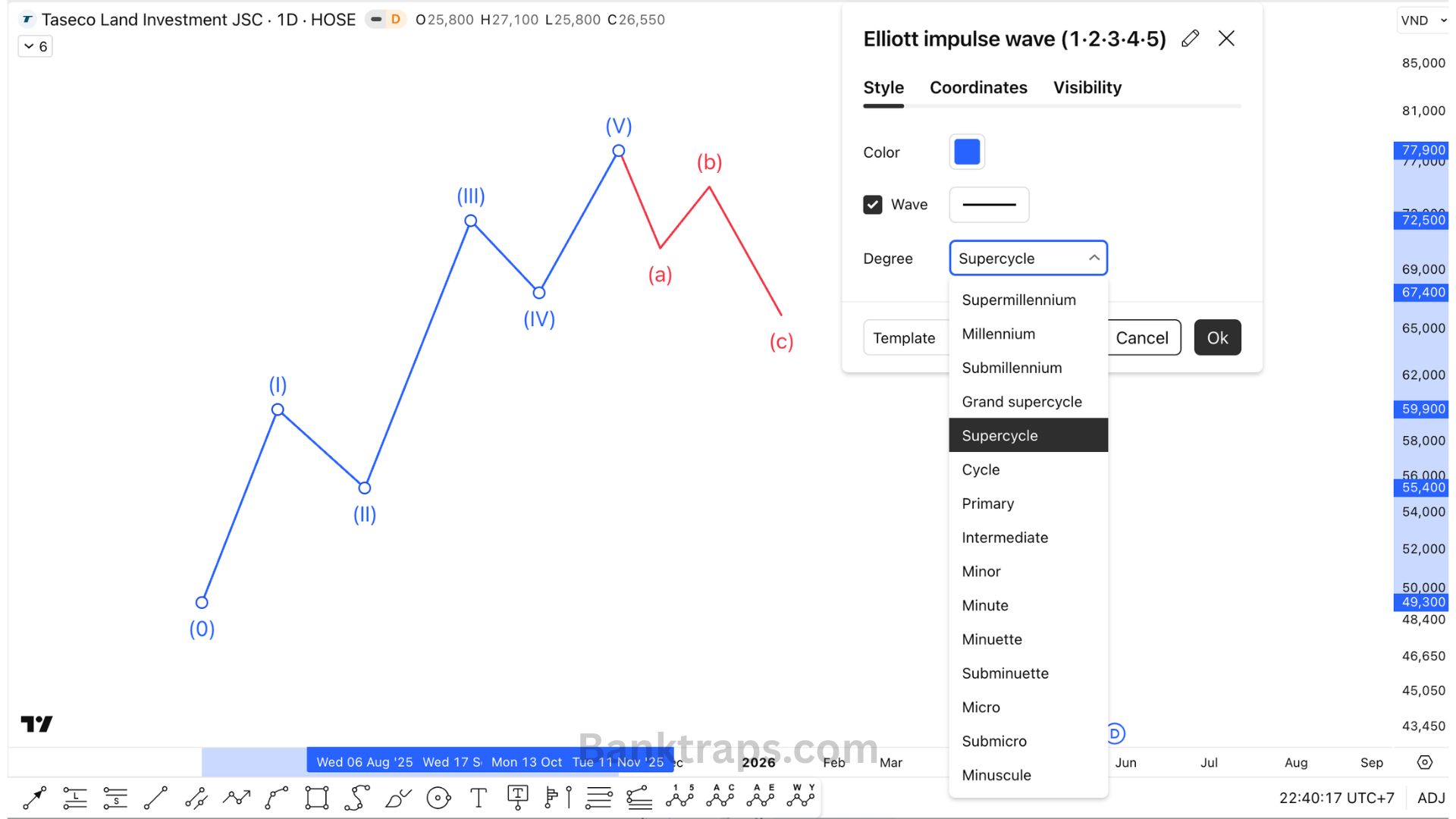 Figure 1: TradingView dividing Elliott wave degrees
Elliott Wave Degree Is Relative
In the Wave Degree table, the timeframe column is only relative — it is not a hard boundary. Frost and Prechter stated clearly: the degree of a wave is determined by its relative position within the surrounding structure, not by its timeframe or absolute magnitude.
A Primary wave can perfectly well last 8 months or 5 years depending on the overall structure surrounding it. The timeframe column is for initial orientation, not for labeling.
What does this mean in practice? Suppose you see a rally lasting 3 months on a stock chart. Is that rally an Intermediate wave or a Primary wave? You cannot answer with the number 3 months alone.
The answer depends entirely on the larger structure surrounding it: are those 3 months one of the 5 waves of a Primary, or just a sub-wave inside an Intermediate that sits within a Primary? The same price segment, viewed two ways, gives two different degrees, and both can be correct depending on the analytical perspective.
The practical consequence: the same price segment, when viewed from different timeframes, will reveal wave structures at different degrees, and all three correctly reflect reality according to their degree. This is why multi-timeframe analysis is essential when counting Elliott waves.
Common Mistakes When Identifying Wave Degree
Mistake 1: Assigning Degree by Timeframe
A trader opens a 4H chart and assumes by default this is the Minor degree. Opens a Daily chart, assumes it is Intermediate. Opens a Weekly chart, assumes it is Primary. This approach is convenient but goes completely against what was said about Elliott wave degree above.
The consequence: When you assign the wrong degree, you set your stop loss according to the "standard" magnitude of the Minor degree, while the market is actually moving at the Intermediate degree with a much larger range of fluctuation. The result: your stop is hit right in a normal corrective swing of the wave, before the structure has actually ended.
The accuracy of degree only truly matters when it affects the comparison of waves of the same degree with each other — not for creating a fixed magnitude framework and imposing it on price.
Mistake 2: Confusing Wave Degrees with Each Other
A familiar situation: the market is in an uptrend, and you identify a motive wave consisting of 5 waves from 1-5. You believe the market is in wave 5 of Primary.
The natural reflex is to conclude this is the final wave before a major decline, and to exit all long positions to prepare for a short position.
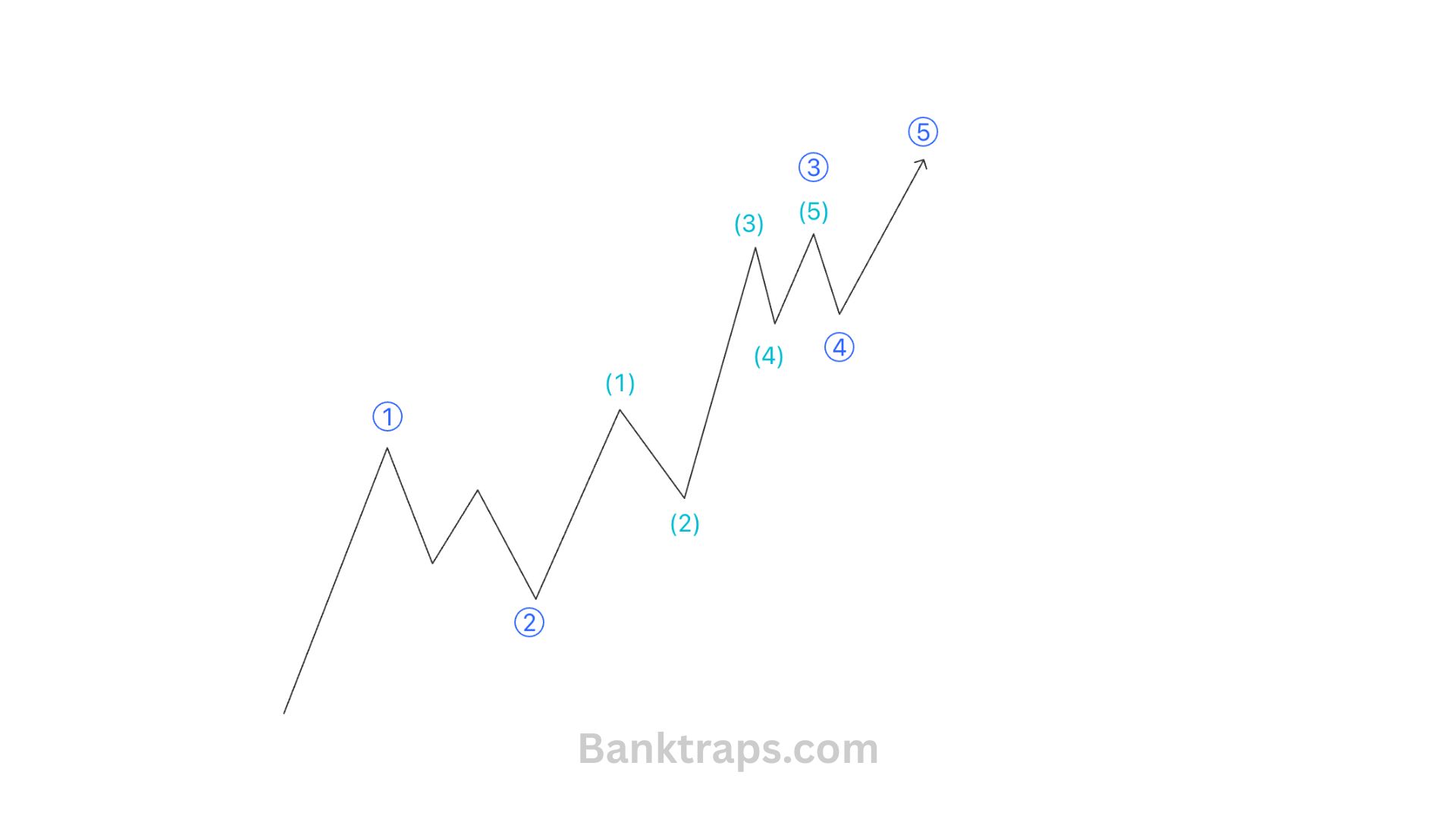 Figure 2: Confusing Elliott wave degree
In reality, you confused wave [4] of the Intermediate degree with wave (4) of the Primary degree. The current fifth wave is only wave (5) of the Intermediate degree. That means price may have only just completed wave [3] of the Primary degree (see Figure 3).
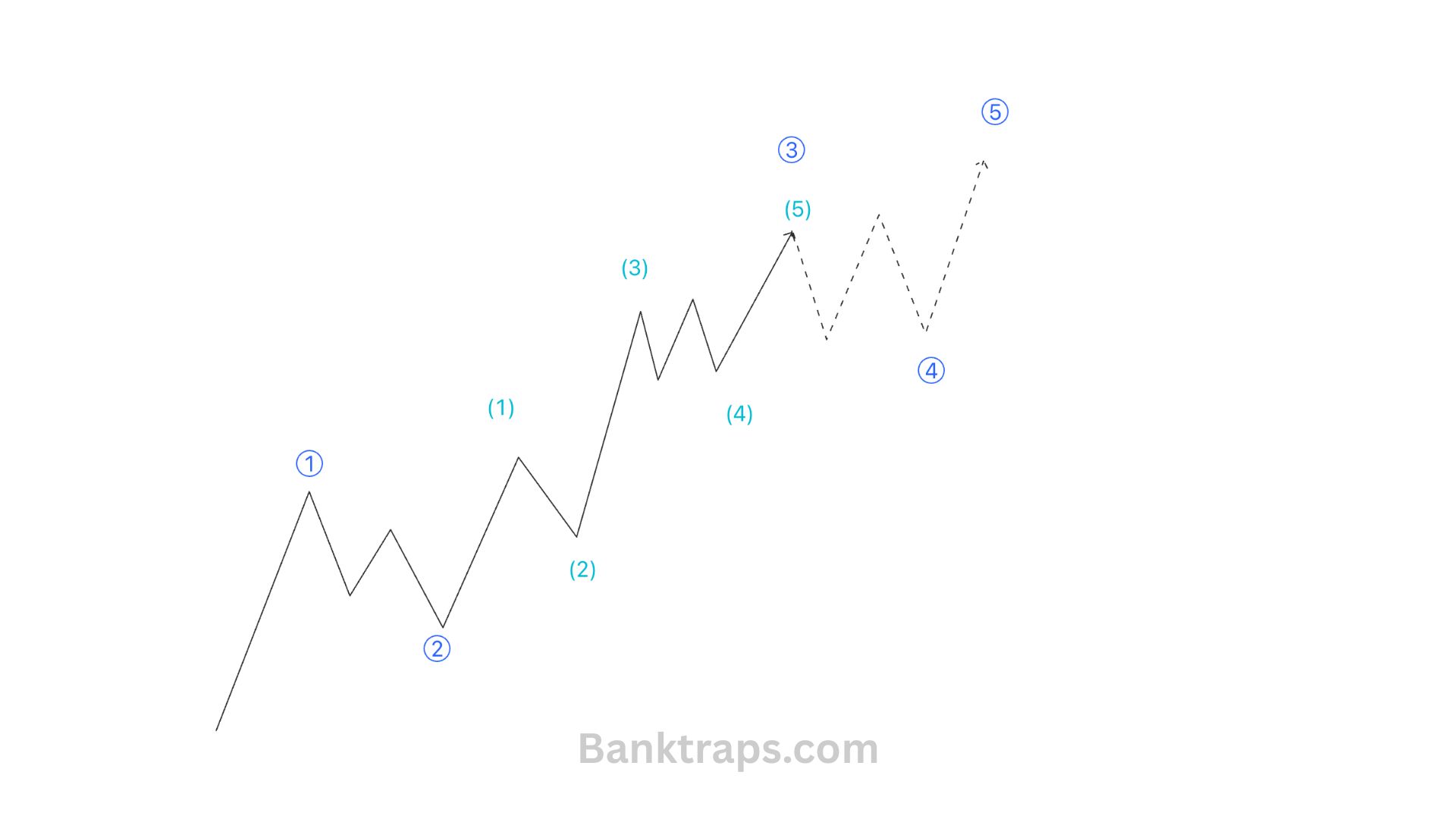 Figure 3: The correct way to count Elliott wave degree
Confusing the degree here leads to 2 consequences:
- Exiting long trades early while price can still rise further in wave [5].
- If you enter a short position, you will be stopped out.
Steps to Identify Wave Degree
The following top-down process follows exactly the spirit that Frost and Prechter proposed for accurately identifying Elliott wave degree:
-
Step 1 — Open the longest-term chart possible. Before counting any small wave, look at the Monthly or Weekly chart to identify the largest wave observable in the available data. This wave is temporarily assigned the highest degree within the scope of your analysis, for example Primary or Cycle depending on the length of price history.
-
Step 2 — Gradually zoom down to shorter charts. Move to Daily, then 4H, then 1H to identify where the current position lies inside the large wave assigned in Step 1. Each time you zoom down a timeframe, you are going one degree level deeper, exactly following the waves-within-waves mechanism presented above.
-
Step 3 — Check consistency between degrees. Sub-waves at a smaller degree must make sense with their position in the larger structure. If you are counting a wave 5 at the Minor degree but the surrounding Intermediate structure is in the middle of a correction, something is wrong with your count and you need to go back and check from Step 1.
You do not need to obsess over naming a wave with absolute precision as Minor or Intermediate. What you need to ensure is that when you compare two waves with each other to apply Elliott rules such as alternation or Fibonacci ratios, both of those waves are at the same degree.
In actual trading, the consistency check in Step 3 is usually where wave counting errors show up earliest, even before price moves against expectations.
FAQ: Frequently Asked Questions About Elliott Wave Degree
Do I have to memorize all 9 Elliott wave degree names?
You are not required to memorize all 9 names. What is more important is understanding the principle of relative degree: whether the wave being analyzed is larger or smaller than the wave adjacent to it. In practice, consistently tracking just 1–2 consecutive degrees, for example Intermediate and Minor, is enough to make trading decisions. Memorizing the exact names from Grand Supercycle down to Subminuette is only necessary when reading long-term analysis documents or working with data spanning decades.
Why do two analysts assign different degrees to the same price segment?
Because both are looking from different surrounding structures, and according to the principle of relative wave degree, that is completely normal. The person assigning Intermediate may be looking at that price segment as a component of a Primary; the person assigning Minor may be zooming into the smaller structure inside that same price segment. A problem only truly arises when one of them is inconsistent: that is, comparing a wave of one degree with a wave of another degree without adjusting, leading to applying the wrong Fibonacci ratio or the wrong stop loss magnitude.
How do I know if I am counting the right degree when I am new to Elliott Wave?
The fastest way to check is to apply the top-down process: start from the longest-term chart, identify the largest observable wave, then gradually zoom down in timeframe. If at each zoom step, the sub-wave structure still makes sense with its position in the larger wave, you are very likely counting the right degree. If you discover a contradiction — for example, a small-degree sub-wave shows a complete pattern but the larger structure is still in the middle — that is a signal to go back to the previous step and recheck.
Does Elliott wave degree affect stop loss and target placement?
Yes, and this is a direct consequence of correctly identifying wave degree. The reasonable range of fluctuation for a stop loss and target at the Minor degree is completely different from the range at the Intermediate degree. Assigning the wrong degree leads to setting a stop that is too tight compared to the market's actual volatility at that degree, or conversely, setting a target that is too far compared to what the wave structure actually allows.
5/5 - (1 vote)
Read structure 10x faster with JUKA
JUKA maps SMC structure — swings, BOS, CHoCH and inducement zones — automatically on any TradingView chart. No more hand-drawing structure for hours.
Get JUKA — $150